Opossums are gentle, non-aggressive animals. When they feel threatened, they almost always try to flee or bluff their way out of danger rather than fight. Over millions of years they have developed a fascinating toolkit of defenses — and one of them gave us a famous phrase.
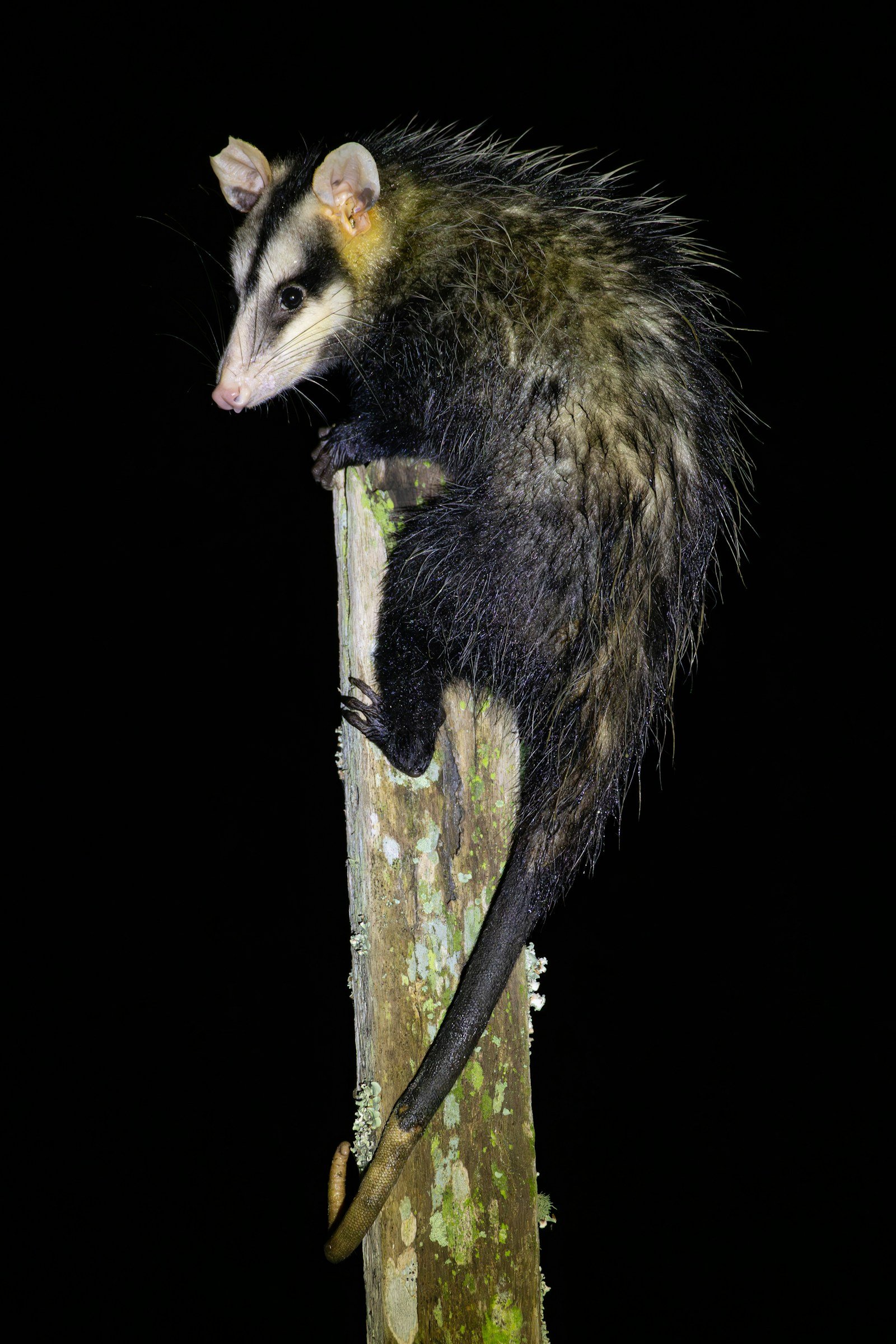
“Playing ‘Possum”
This is the opossum’s most famous trick, and it is not a clever act — it is an involuntary response. When extreme fear takes over, the opossum can fall into a comatose-like state, going completely limp with its mouth open and tongue out. Because many predators are triggered by the movement of live prey, an apparently dead opossum simply fails to interest them, and they move on. When the danger passes, the opossum somehow senses it is safe and quietly “comes back to life.”
Drooling and Foaming
A frightened opossum may work its jaws until it produces heavy drool and even blows bubbles from its nose. This makes the animal look sick and unappetizing, encouraging a predator to leave it alone.
The “Alligator” Gape
When cornered, an opossum will open its mouth wide in a dramatic, toothy display — showing off all 50 of its teeth. It looks fierce, but it is almost entirely a bluff. Even baby opossums do this before they have any teeth at all, not yet realizing the threat only works once the teeth arrive.
A Smelly Last Resort
Under severe stress, an opossum may release a greenish, foul-smelling fluid from its anal glands. Opossums cannot spray this fluid the way a skunk does — it only transfers if you brush directly against the animal — and it washes off easily. Like the other defenses, it is meant to convince a predator that this animal is not worth eating.