The opossum is one of the oldest and most misunderstood mammals in North America. Its ancestors shared the planet with the dinosaurs more than 70 million years ago, and the animal has changed remarkably little since. Despite a superficial resemblance to a large rat, the opossum is not a rodent at all — it is a marsupial, a close relative of the kangaroo and the koala.
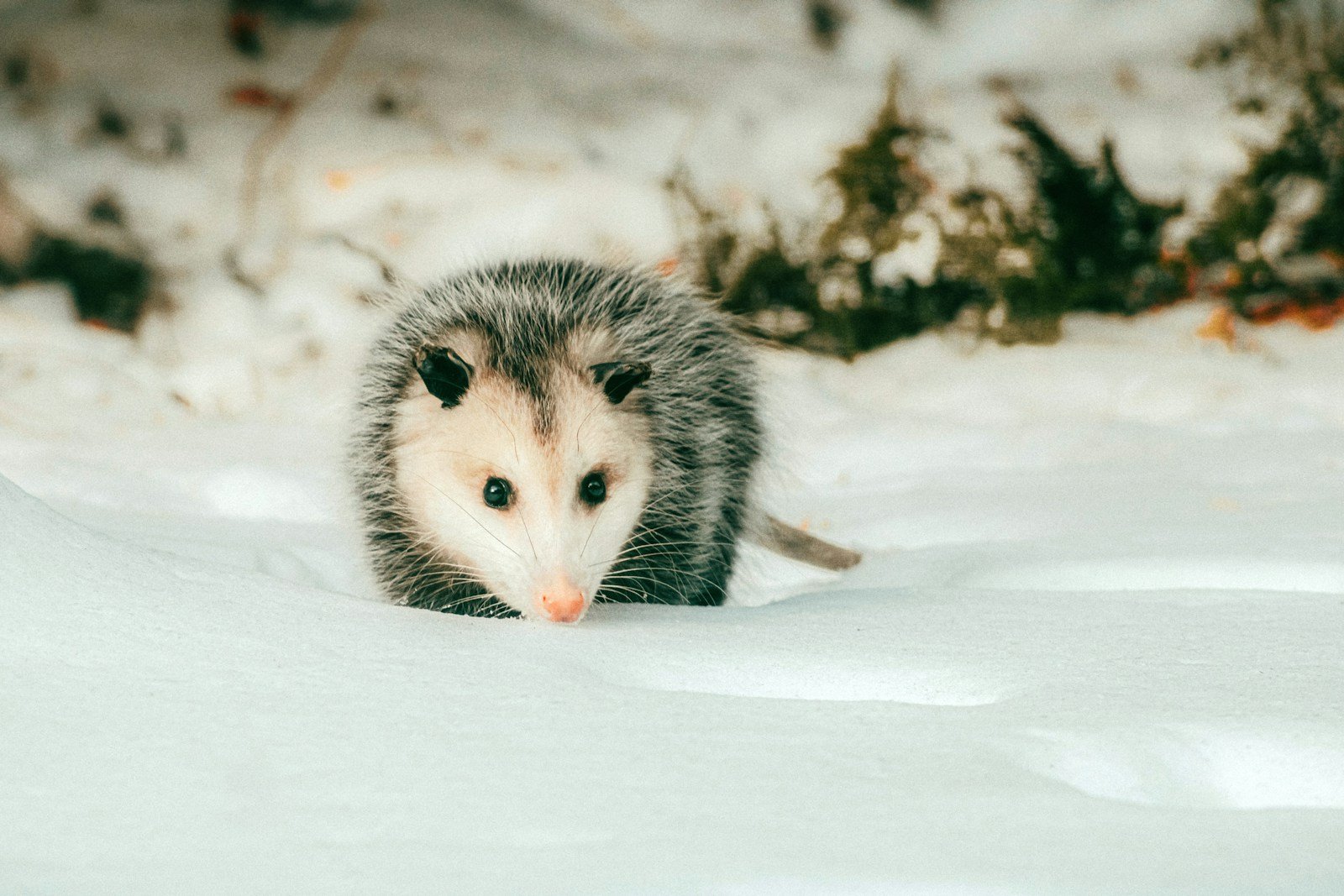
North America’s Only Marsupial
The Virginia opossum (Didelphis virginiana) holds a unique distinction: it is the only marsupial native to the United States and Canada. Like other marsupials, the female carries and nurses her tiny, underdeveloped young inside a pouch. The name Didelphis means “double womb,” a reference to the pouch acting as a second place of development, while virginiana honors Virginia, where English colonists first documented the animal. The word “opossum” itself comes from the Algonquian term apasum, meaning “white animal.”
While more than 100 opossum species live throughout the Americas, only the Virginia opossum ranges this far north. Today it can be found across most of the United States and into parts of Canada and Mexico. Curious how it differs from the Australian possum? See opossum vs. possum.
Remarkable Anatomy
- 50 teeth — more than any other land mammal in North America.
- A prehensile tail used for balance, grasping branches, and carrying bundles of nesting material. Contrary to popular belief, adult opossums do not sleep hanging upside down by the tail.
- Opposable thumbs on the hind feet, which help them grip branches while climbing.
- A naturally low body temperature that makes them highly resistant to rabies and many other diseases.
A Short but Busy Life
Opossums live fast. In the wild their average lifespan is only one to two years, largely because they face so many predators — dogs, cats, owls, and automobiles among them. (How long do opossums live?) They are nocturnal, solitary, and constantly on the move, rarely staying in the same den for more than a few nights. When threatened, they rely on a famous set of defenses rather than speed or aggression.