The opossum’s life cycle is one of the most remarkable in the animal kingdom. As a marsupial, the female gives birth to young that are barely more than embryos, then raises them through a delicate journey from her birth canal to her pouch and, eventually, onto her back.
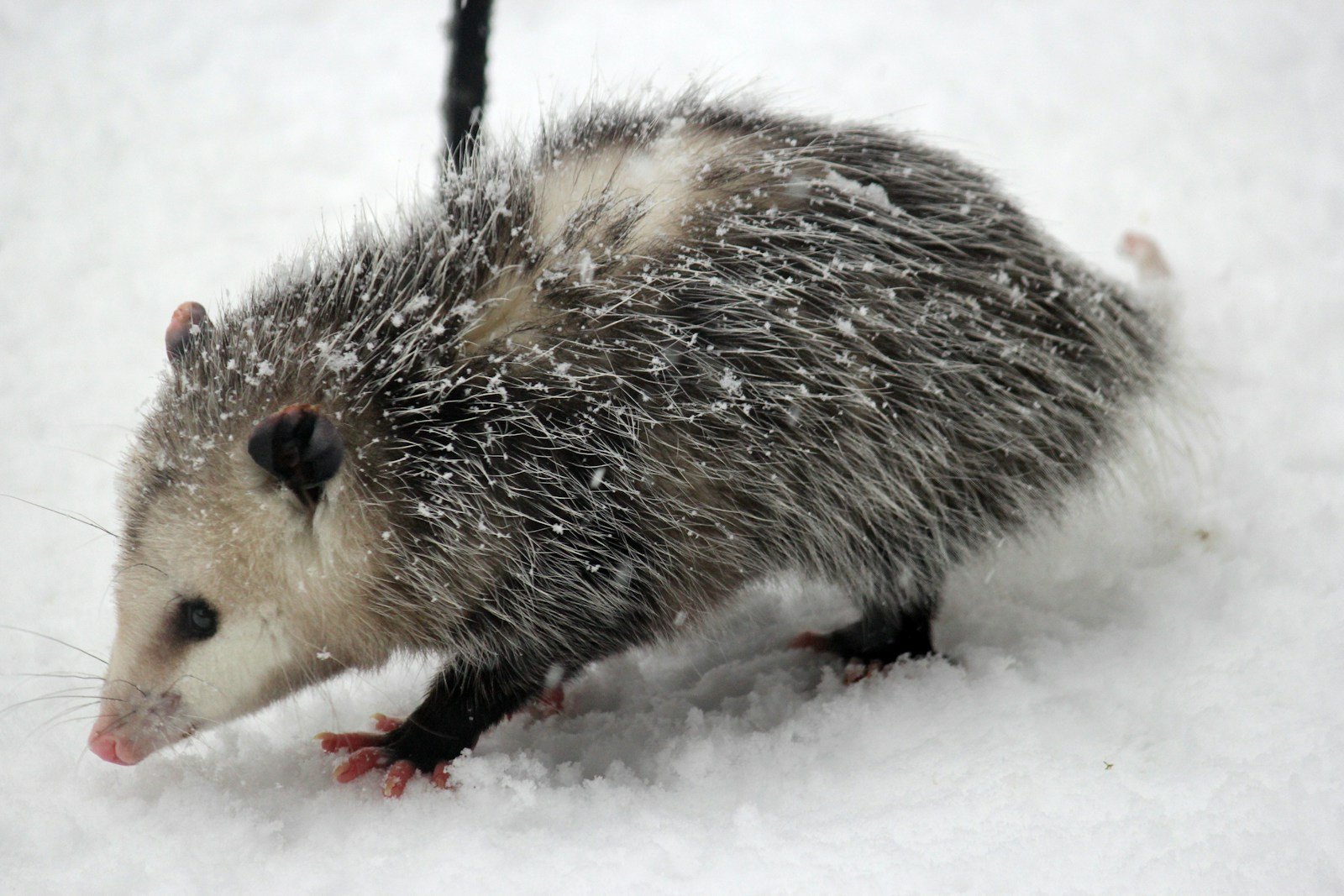
Breeding Season
In the Virginia opossum, breeding can begin as early as December and continue into October, with most young born between February and June. A female may raise one to three litters in a single year. During mating season, males make soft clicking sounds with their mouths to attract females.
A Tiny, Early Birth
After a gestation period of just 11 to 13 days, the young are born. They are so small that around 20 of them could fit into a single teaspoon — each about the size of a honeybee and weighing a fraction of a gram. Newly born, they must crawl unaided from the birth canal up to the pouch, latch onto a teat, and continue developing there. A female typically has around 13 teats, and any young that cannot find one will not survive, so litter size is naturally limited.
Growing Up in the Pouch
The young remain attached inside the pouch for roughly two and a half months. Their eyes open at around 55 to 70 days. Once they grow too large for the pouch, they climb onto their mother’s back and ride along as she forages — learning to find food and avoid danger. If a youngster becomes separated, it makes a sneezing sound to call out, and the mother answers with clicking sounds.
On Their Own
Young opossums are weaned at about three months and become independent at roughly four and a half to five months of age, when they measure around seven to nine inches from nose to rump. Within a few more months they are ready to reproduce and begin the cycle again.
Important: because a mother carries her young hidden in her pouch, any opossum found dead — especially by a roadside — should have its pouch checked for live young, which can sometimes still be saved by a licensed wildlife rehabilitator.